
INDUSTRY 4.0

INTRODUCTION

The first article that I deal with in these pages is an article on this new industrial revolution, which is affecting the current industrial sector: INDUSTRY 4.0.

I start with this topic because it is a topic that affects many fields of electronics: automation, robotics, information security, communication, management of large amounts of data (BIG DATA), energy and artificial intelligence. This article will be deliberately descriptive because it is an overview of the fourth industrial revolution . The following articles will delve into the various topics to give substance to the information that this site will contain.

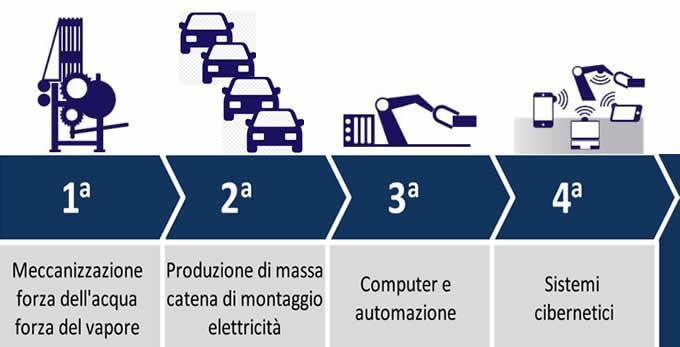
L ‘INDUSTRY 4.0 is called so because it is the fourth industrial revolution, and by analogy we can define the three previous revolutions as well: below an illustration of the four stages of industrial development
INDUSTRY 1.0 [1]

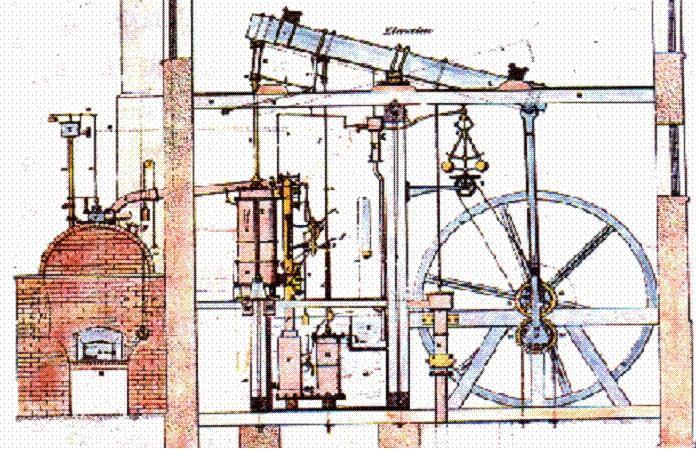
The first industrial revolution took place in the 1700s, with the first mechanical looms and the first steam engines. Steam was the first non-animal source of energy that allowed us to “animate” machines to help man in production.
INDUSTRY 2.0 [2]

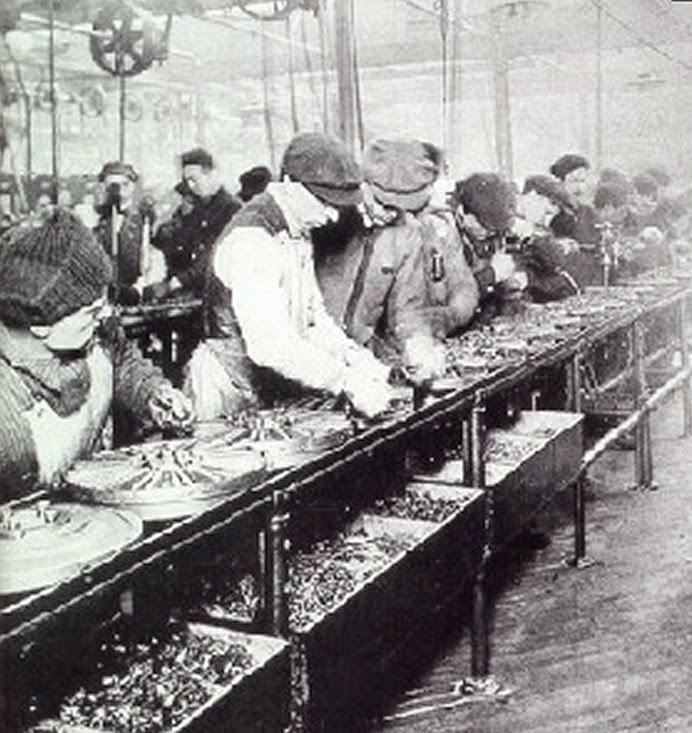
The second industrial revolution took place in the second half of the 1800s. This was a period of strong innovation, scientific and otherwise, thanks to the spread of electricity. This gave way to mass production: with the new discoveries, it simplifies the supply of energy that leads to the improvement of production machines, making them more and more complex.
INDUSTRY 3.0 [3]

T he third industrial revolution began in the second half of the ‘900, after the end of the second G uerra M ondiale. The accumulation of scientific and technological knowledge and the most stable political conditions favors Western countries scono economic growth. ( In this period there is the creation of the first telematic network between the Standford Research Institute and the University of Utah, ARPANET ) In a short time the computer becomes a tool that everyone can afford, so the technology that was previously used exclusive to industrial and state giants (such as universities), it is now accessible to all. At the same time the diffusion of industrial automation kicks off.
INDUSTRY 4.0 [4]

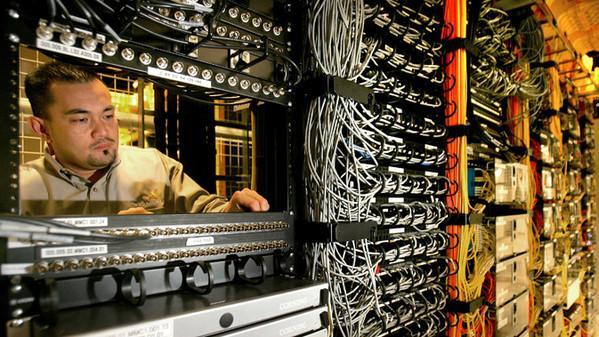
The fourth industrial revolution (which forecasts began in 2010) opens up interconnected digital systems.
INTERCONNECTED SYSTEMS

What is meant by “interconnected systems“? With this concept we begin to speak of communication, the communication affects all electronics and dell ‘IT branches, precisely because the only passage of a bit from the CPU to the RAM can be considered a transmission of a given X from one device to another . This transmission takes place with rules that govern the storage of data in the memory, such as the selection of the memory area where to store the data, or if you want to write or read, or to know if the memory is ready to receive the data .

Subsequently, as the distance between the devices increases, certain certainties begin to be lacking, such as the fact that the data has arrived intact and not corrupted. This is why communication protocols have been introduced . By interconnected systems we mean systems that can communicate with each other regardless of the distance they are located, through these predefined protocols.

We can say that the way to this interconnection was given with the advent of the IoT (Internet of Thing – the Internet of things) with which we started to interconnect various devices, such as appliances, devices to monitor the environment or our physiological functions, which collect and send information on their operation, data and much more through our mobile phones and clouding.

To switch to industrial applications, communication had to be made safer, moving from protection against electromagnetic disturbances to data security. From this was born the IIoT (Industrial Internet of Thing – Internet of industrial things) [5] .

It must be premised that until today the industrial machines (except for a few exceptions) have been produced to work autonomously without external interference, if not that of the operator who interacts with the machine to take the finished product and supply it with raw product or raw material and enter the data for processing. A ‘have with the exception of the production lines, where we have several machines in line, with the raw material inserted at the beginning of the line and the finished product or semi-finished product in the end. Here all the machines are in communication with each other (let’s say a basic communication, through inputs and outputs) in order to coordinate to keep the product on the line.

With the implementation of communication (communication protocols) you can get a lot of information regarding the status of the machine, such as the number of pieces produced, machine stops due to emergency or breakdown, the status of the engines or components, the reasons why it produced more or not yesterday, etc … In practice these are all information that will be available for a subsequent analysis or in real time of the machine status. However, this amount of data has a downside: it must be analyzed. This means that in the company there must be personnel specialized in data analysis (BIG DATA).

Moreover, having a real-time analysis of the state of the machine and above all having a lot of information available from other plants (in the cloud), the solution to a possible problem may already be available and this would further reduce downtime. Having professionals able to analyze the data is of vital importance, because implementing a structure like this and then not being able to analyze the data is a loss already at the start.

Starting the path of industry 4.0 is not easy! In addition to the speech of qualified personnel there is also all the technological update to be performed . For this, some guide points have been drawn up that indicate a sure way to reach the goal of Industry 4.0 [6]

  1. Set goals according to your level of digitization
  2. Start with pilot projects
  3. Define the required skills: according to point 2 it is necessary to define the level of technical skills of the personnel
  4. Familiarity with data analysis
  5. Transform the company into a digital company
  6. Interacting with the system (without interaction it makes no sense to talk about Industry 4.0)

Computer security [5] [7] [8]

The spread of IIoT (or rather IoT) involves some pitfalls like energy expenditure and security : two points of fundamental importance.

The security that until or oday was relegated to servers and computers, with industry 4.0 must be implemented in industrial systems, as with communication expanding at all levels, a lack of or incorrect information can undermine productivity creating many problems. Communication must be fast and reliable, because the data arriving at the destination must be complete, but above all not corrupted or modified. When we talk about information theft, we associate the concept with industrial espionage, but in addition to this the importance of security is that the data arrives complete and not modified or corrupted, because a wrong datum can have negative consequences on production, like producing lots wrong, or send undetected malfunction messages . All possibilities that affect business productivity and costs.

Communication [9]

Since communication is the backbone of industry 4.0, it must be fast and reliable: the data must arrive at full destination as quickly as possible, as any data lost or delayed could lead to a wrong action, and therefore a possible machine downtime planned or a chain of delays, slowing down production or producing products that are unsuitable for sale . I l it all translates into a loss of profit.

Communication between devices requires that each individual component of the network be able to interpret various communication protocols, to ensure that these systems can be integrated into various environments and, above all, reduced to a minimum as their energy consumption must be minimal. For this reason, in my opinion, everything will flow towards a single standard communication protocol, reducing the components required for communication and thus reducing energy consumption.

This communication protocol, like all communication protocols, dev and satisfy the following points:

●        security: as previously mentioned, communication must be secure, thus preventing corruption or data theft.

●        low energy consumption: as the devices (sensors or actuators) are ever smaller and more independent, their energy consumption must be very low. This is not only for a matter of energy saving, but also because these small-sized devices can be used in places that are difficult to access, where interventions for renewing the energy source can be reduced to a minimum.

●        robust ness: in the event of problems in the system, communication must always be active, or at least be able to provide the information needed for troubleshooting.

●        easy to implement: it means that the hardware and software components must be easily available and easy to implement, as well as the addition of new nodes or the removal of old ones.

The Clouding [9]

Another factor introduced with industry 4.0 is clouding, ie the sharing of information on the net. This sharing is a fundamental point, as their processing in real time can anticipate and avoid downtime. This implies that for some (if not all) of the problems of the production line or machine, they could already have a solution, giving way to that whole process of resolution and planning of the machine downtime obtaining a consequent reduction of machine downtime due to faults sudden.

Machine downtime is not only due to a fault, but can also arise from incorrect processing or incorrect information. This information is generally entered by the operator and here the user interface (HMI) comes in handy, which in symbiosis with the clouding checks and verifies the correctness in the input of the processing data, anticipating and preventing errors, bringing to zero (in theoretical line) the error introduced by man.

Interfaces (HMI) [9]

Human-machine interfaces are increasingly complex because they have to perform complex tasks, but at the same time simplify visual information and data collection, so that the interpretation of the required data is facilitated to the operator. Increasingly complex interfaces make it possible to automate data entry, machines become increasingly autonomous and production can literally change. It can be assumed that the old concept of spreading tooling costs on production (the more pieces I make in one lot, the less they cost me), can be abandoned to start talk about batches from a product, making customization extreme for the customer. An example of easy intuition can be the assembly line of a car, in which the customer can decide what accessories to have: this level of customization is already present, but a level of extreme variety can be reached, from the choice of color to the number of speakers in the cockpit, all not supplied through packages, which oblige the customer to accept various devices in order to have that particular accessory.

Smart sensors and factories [10] [11] [12]

In order to obtain the automation level mentioned in the previous section, an improvement of the sensor part is required: in fact, without intelligent sensors, many of the functions (especially diagnostics) cannot be performed . Sensors that collect data on the behavior of the machine and anticipate any break (Predictive Maintenance), sensors capable of monitoring and signaling an anomalous variation of one or more values, with in addition a low energy profile so as to be used in poor environments accessible, that are able to communicate with various devices, until you can take advantage of a communication standard for everything: for this it is necessary to develop more or less complex software for these sensors, precisely, defined as intelligent sensors.

Moreover with these intelligent sensors it will be possible to carry out workings aimed at the batch of a component, for example it will be possible to determine the type of bottle and where to send it to pack it.

Of course this means that the decision-making responsibility is no longer tied to the centralized controller, but is delegated to these sensors located in the plant, sensors with predictive software for data analysis, which do not send all the amount of data collected, but only the result of their elaborations (this is always a speech in terms of low energy profile).

These sensors must be managed and the PLC is the tool to perform this task. Today, a PLC is equipped with multiple communication protocols, so it can be integrated into a corporate LAN allowing data sharing and collection. This sharing and collection gives the advantage of having a database available which can be consulted when there are any anomalies, to find a solution and reduce machine downtime.

With industry 4.0 we start talking about an intelligent factory , but besides being an almost utopian discourse, given that the road is still long and full of many hardships, companies are forced to be eclectic, due to the variety / quantity of skills that come into play, and must be able to formalize the decision-making process in order to provide the right solution: an incorrect decision could lead to unscheduled production blocks.

AI – Artificial intelligence

At this point we introduce the concept of artificial intelligence , useful because after all the references made it has always been mentioned that with industry 4.0 an analysis or diagnostics of the data provided and an automation to perform the operations are required. Industry 4.0 uses automation and robotics to perform its operations, but without artificial intelligence and data the IIoT is lame: the AI ​​processes all the data collected by making predictions about the behavior of the machine over time and predicting a failure. This means that machine downtimes can be reduced to zero. Moreover with the AI ​​the industry will no longer have to depend on the collection of data by man, but rather will be autonomous in the collection limiting to zero any errors introduced by man. Here we introduce the concept of predictive diagnosis , which we will address in one of the next articles, which is based on data analysis and by means of predictive algorithms performs a prediction on possible future failures. All this will be possible because the analysis of data over time of a given component, such as increased operating temperatures, increased vibrations, currents, heat dissipation, magnetic fields, allow the software, with the help of the cloud, to determine when the component will fail or arrive at the end of its life.

Starting from the assumption that the error will never be null because man is naturally subject to error, every product of man is potentially affected by congenital errors, so even AI is affected by this problem precisely because it is developed by man. This is why neural networks and machine learning are coming to the fore with artificial intelligence, which will allow the machines to correct their congenital errors, due to man’s programming. Here we enter into philosophical theories about the presence or absence of errors even in neural networks, but which we will face in due course.

Cobot [13]

Cobot or collaborative robots, from research done, is seen from the collaboration between man and machine would reduce non-production time by 85%. Currently the gap between A.I. artificial intelligence is wide, precisely because a worker immediately realizes that a piece is damaged or has changed, while a robot must be instructed or have instructions to manage these inconsistencies, otherwise it will continue to perform its work without noticing the change . But instructions or learning period to manage these eventualities the attention is a long time in which the production is stopped, producing inoperative costs. That said the intelligence gap relegates the cobots to an area of ​​habitual tasks, while the man takes care of those tasks that require more intelligence. This means that cobot and man must work in close contact, and this raises many security problems, which slow down the integration between man and machine. In support of this limit (even if not negative) international standards are emerging which provide for a definition of the requirements for safe operation of cobots, these standards are ISO / TS 15066: 2016, ANSI / RIA R15.06-2012. An aid to the development of cobots can be given by the experience accumulated in the development of robotic prostheses for the disabled, such as Force-Feedback.

Conclusions

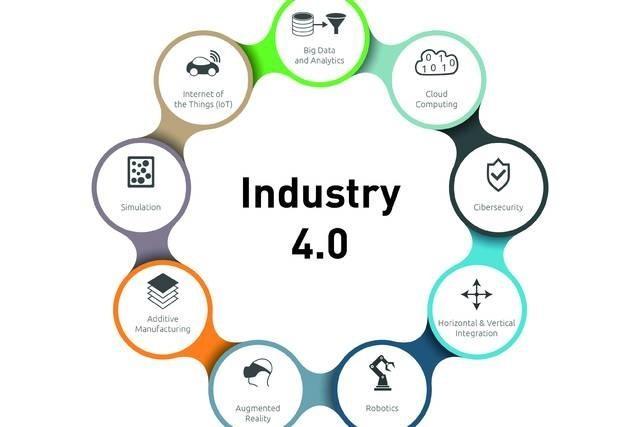
in conclusion, in industry 4.0 we talk about communication, artificial intelligence, neural networks, diagnostics and maintenance, IT security, automation clouding, robotics, big data and much more.

All arguments that in these first pages I have only mentioned and, as repeated several times, I will deepen in the next articles. One thing I wanted to highlight is that I didn’t read from many parts is diagnostics. In all the articles we find we talk about security, artificial intelligence, man-machine interface, etc. etc., but little and rarely we find references to diagnostics for fault detection. In my opinion a vital topic in the fourth industrial revolution, because if vo gl iamo minimize downtime, we must have a diagnostic method and anomaly detection so that during the software development are incorporated these concepts and d sensors they will be able to perform more accurate diagnoses.

Another point on which I would like to leverage is the analysis of data, this is also very important, because with these new types of sensors, as already said several times, the data will be in large quantities, precisely because the more data we have / we analyze the better we succeed to have the complete picture of the situation. A complete picture of the situation will make it possible to make more accurate and efficient decisions, increasingly improving the level of production.

BIBLIOGRAPHY – SITOGRAFIA

●        [1] First Industrial Revolution

●        [2]   Second industrial revolution

●        [3] Digital revolution

●        [4] Fourth industrial revolution

●        [5] EOS Book # 31 – Safety in industry 4.0 – author Maurizio Di Paolo Emilio – EOS – Open Source Electronics

●        [6] Firmware 130 – Industry strategies 4.0 – author Slovati EOS – Open Source Electronics

●        [7] Firmware 142 – Connectivity and security in the IoT – author Maurizio Di Paolo Emilio – EOS – Open Source Electronics

●        [8] Firmware 145 – Security in a smart factory 4.0 – author Maurizio Di Paolo Emilio – EOS – Open Source Electronics

●        [9] Firmware 130 – Industry 4.0: From automation to digitization processes – author Roberta Fiorucci – EOS – Open Source Electronics

●        [10] Firmware 130 – The sensors in the industry 4.0 – author Slovati – EOS – Open Source Electronics

●        [11] 145 firmware – MEMS sensors for the digitalization of the Industry – author Maurizio Di Paolo Emilio – EOS – Open Source Electronics

●        [12] Firmware 152 – The needs of future sensors for maintenance: intelligent sensors for condition monitoring – author Analog Devices – EOS – Open Source Electronics

  • [13] Firmware 149 Cobot Bridging the gap with artificial intelligence in the industrial automation sector – author Mouser Electronnics – EOS – Open Source Electronics

REVISIONS

  • April 13, 2020 Add link to new article on digital comunication
  • October 11, 2019 Add link to new article on Diagnostic
  • August 19, 2019 Section Cobot
  • July 09, 2019 Correct some links
  • July 07, 2019               Publication

INDUSTRIA 4.0

INTRODUCCIÓN

El primer artículo que trato en estas páginas es un artículo sobre esta nueva revolución industrial, que está afectando al sector industrial actual: INDUSTRIA 4.0.

Empiezo con este tema porque es un tema que afecta a muchos campos de la electrónica: automatización, robótica, seguridad de la información, comunicación, gestión de grandes cantidades de datos (BIG DATA), energía e inteligencia artificial. Este artículo será deliberadamente descriptivo porque es un resumen de la cuarta revolución industrial . Los siguientes artículos profundizarán en los diversos temas para dar contenido a la información que contendrá este sitio.

L ‘INDUSTRIA 4.0 se llama así porque es la cuarta revolución industrial, y por analogía podemos definir las tres revoluciones anteriores, así: a continuación una ilustración de las cuatro etapas del desarrollo industrial

INDUSTRIA 1.0 [1]

La primera revolución industrial tuvo lugar en el siglo XVIII, con los primeros telares mecánicos y las primeras máquinas de vapor. Steam fue la primera fuente de energía no animal que nos permitió “animar” máquinas para ayudar al hombre en la producción.

INDUSTRIA 2.0 [2]

La segunda revolución industrial tuvo lugar en la segunda mitad del siglo XIX. Este fue un período de fuerte innovación, científica y de otro tipo, gracias a la propagación de la electricidad. Esto dio paso a la producción en masa: con los nuevos descubrimientos, simplifica el suministro de energía que conduce a la mejora de las máquinas de producción, haciéndolas cada vez más complejas.

INDUSTRIA 3.0 [3]

L a tercera revolución industrial comenzó en la segunda mitad de la ‘900, después del final de la segunda ondiale G uerra M. La acumulación de conocimientos científicos y tecnológicos y las condiciones políticas más estables favorece el crecimiento económico de los países occidentales scono. ( En este período se crea la primera red telemática entre el Standford Research Institute y la Universidad de Utah, ARPANET ). En poco tiempo, la computadora se convierte en una herramienta que todos pueden pagar, por lo que la tecnología que se usaba anteriormente Exclusivo para los gigantes industriales y estatales (como las universidades), ahora es accesible para todos. Al mismo tiempo se inicia la difusión de la automatización industrial.

INDUSTRIA 4.0 [4]

La cuarta revolución industrial (que comenzó en 2010) abre sistemas digitales interconectados.

SISTEMAS INTERCONECTADOS

¿Qué se entiende por “sistemas interconectados“? Con este concepto empezamos a hablar de la comunicación, la comunicación afecta a todas las ramas de la electrónica y TI de Dell, precisamente porque el único paso de un poco de la CPU a la memoria RAM se puede considerar una transmisión de un X dado desde un dispositivo a otro . Esta transmisión tiene lugar con reglas que gobiernan el almacenamiento de datos en la memoria, como la selección del área de memoria donde almacenar los datos, o si desea escribir o leer, o saber si la memoria está lista para recibir los datos. .

Posteriormente, a medida que aumenta la distancia entre los dispositivos, comienzan a faltar ciertas certezas, como el hecho de que los datos llegaron intactos y no se dañaron. Por eso se han introducido los protocolos de comunicación . Por sistemas interconectados nos referimos a sistemas que pueden comunicarse entre sí independientemente de la distancia a la que se encuentren, a través de estos protocolos predefinidos.

Podemos decir que el camino a esta interconexión se dio con la llegada de IoT (Internet of Thing, Internet of things) con la que comenzamos a interconectar varios dispositivos, como dispositivos, dispositivos para monitorear el El medio ambiente o nuestras funciones fisiológicas, que recopilan y envían información sobre su funcionamiento, datos y mucho más a través de nuestros teléfonos móviles y la nube.

Para pasar a las aplicaciones industriales, la comunicación debía ser más segura, pasando de la protección contra las perturbaciones electromagnéticas a la seguridad de los datos. De aquí nació el IIoT (Internet de la cosa industrial – Internet de las cosas industriales) [5] .

Debe tener la premisa de que, hasta hoy, las máquinas industriales (salvo algunas excepciones) se han fabricado para funcionar de manera autónoma sin interferencias externas, si no la del operador que interactúa con la máquina para tomar el producto terminado y suministrarlo con producto crudo o materia prima e ingrese los datos para su procesamiento. A ‘tienen con la excepción de las líneas de producción, donde tenemos varias máquinas en línea, con la materia prima insertado al principio de la línea y el producto terminado o del producto semi-acabado en el extremo. Aquí todas las máquinas están en comunicación entre sí (digamos una comunicación básica, a través de entradas y salidas) para coordinar y mantener el producto en la línea.

Con la implementación de la comunicación (protocolos de comunicación) puede obtener mucha información sobre el estado de la máquina, como el número de piezas producidas, paradas de la máquina debido a una emergencia o avería, el estado de los motores o componentes, las razones por las que se ha producido más hoy o no ayer, etc. En la práctica, se trata de toda la información que estará disponible para un análisis posterior o en tiempo real del estado de la máquina. Sin embargo, esta cantidad de datos tiene un inconveniente: debe ser analizada. Esto significa que en la empresa debe haber personal especializado en análisis de datos (BIG DATA).

Además, al tener un análisis en tiempo real del estado de la máquina y, sobre todo, tener mucha información disponible de otras plantas (en la nube), la solución a un posible problema ya podría estar disponible y esto reduciría aún más el tiempo de inactividad. Tener profesionales capaces de analizar los datos es de vital importancia, porque implementar una estructura como esta y luego no poder analizar los datos es una pérdida ya al comienzo.

¡Comenzar el camino de la industria 4.0 no es fácil! Además del discurso del personal calificado, también se encuentra toda la actualización tecnológica que se realizará . Para esto, se han elaborado algunos puntos de guía que indican una manera segura de alcanzar la meta de la Industria 4.0 [6]

  1. Establezca metas de acuerdo a su nivel de digitalización.
  2. Empezar con proyectos piloto.
  3. Defina las habilidades requeridas: de acuerdo con el punto 2 es necesario definir el nivel de habilidades técnicas del personal
  4. Familiaridad con el análisis de datos.
  5. Transformar la empresa en una empresa digital.
  6. Interactuar con el sistema (sin interacción no tiene sentido hablar de Industria 4.0)

Seguridad informática [5] [7] [8]

La difusión de IIoT (o más bien de IoT) implica algunos escollos como el gasto de energía y la seguridad : dos puntos de importancia fundamental.

La seguridad que hasta oy o fue relegada a los servidores y ordenadores, con la industria 4.0 se debe implementar en los sistemas industriales, al igual que con la expansión de la comunicación en todos los niveles, la falta de información incorrecta o pueden socavar la productividad creación de muchas problemas. La comunicación debe ser rápida y confiable, ya que los datos que llegan al destino deben estar completos, pero sobre todo, no deben estar dañados ni modificados. Cuando hablamos de robo de información, asociamos el concepto con el espionaje industrial, pero además, la importancia de la seguridad es que los datos llegan completos y no están modificados ni dañados, porque un dato incorrecto puede tener consecuencias negativas en la producción, como la producción de lotes. mal, o enviar mensajes de mal funcionamiento no detectados . Todas las posibilidades que afectan la productividad y los costes empresariales.

Comunicación [9]

Dado que la comunicación es la columna vertebral de la industria 4.0, debe ser rápida y confiable: los datos deben llegar a su destino completo lo más rápido posible, ya que la pérdida o demora de los datos puede provocar una acción incorrecta y, por lo tanto, un posible tiempo de inactividad de la máquina. planeado o una cadena de retrasos, ralentizando la producción o produciendo productos que no son aptos para la venta . T Todo esto se traduce en una pérdida de beneficios.

La comunicación entre dispositivos requiere que cada componente individual de la red pueda interpretar varios protocolos de comunicación, para garantizar que estos sistemas puedan integrarse en diversos entornos y, sobre todo, reducirse al mínimo, ya que su consumo de energía debe ser mínimo. Por este motivo, en mi opinión, todo fluirá hacia un único protocolo de comunicación estándar, reduciendo los componentes necesarios para la comunicación y, por lo tanto, reduciendo el consumo de energía.

Este protocolo de comunicación, como todos los protocolos de comunicación, desarrolla y satisface los siguientes puntos:

●        Seguridad: como se mencionó anteriormente, la comunicación debe ser segura, evitando así la corrupción o el robo de datos.

●        Bajo consumo de energía: como los dispositivos (sensores o actuadores) son cada vez más pequeños e independientes, su consumo de energía debe ser muy bajo. Esto no es solo por una cuestión de ahorro de energía, sino también porque estos dispositivos de tamaño pequeño se pueden usar en lugares de difícil acceso, donde las intervenciones para renovar la fuente de energía se pueden reducir al mínimo.

●        Ness robusta: en caso de problemas en el sistema, la comunicación debe estar siempre activo, o al menos ser capaz de proporcionar la información necesaria para la solución de problemas.

●        fácil de implementar: significa que los componentes de hardware y software deben estar fácilmente disponibles y fáciles de implementar, así como la adición de nuevos nodos o la eliminación de los antiguos.

La nubosidad [9]

Otro factor introducido con la industria 4.0 es la nubosidad, es decir, el intercambio de información en la red. Este intercambio es un punto fundamental, ya que su procesamiento en tiempo real puede anticipar y evitar el tiempo de inactividad. Esto implica que para algunos (si no todos) de los problemas de la línea de producción o la máquina, ya podrían tener una solución, dando paso a todo el proceso de resolución y planificación del tiempo de inactividad de la máquina, obteniendo la consiguiente reducción del tiempo de inactividad de la máquina debido a fallas. súbita.

El tiempo de inactividad de la máquina no solo se debe a una falla, sino que también puede deberse a un procesamiento incorrecto o información incorrecta. Esta información generalmente es ingresada por el operador y aquí la interfaz de usuario (HMI) es útil, lo que en simbiosis con la nube comprueba y verifica la exactitud en la entrada de los datos de procesamiento, anticipando y previniendo errores, llevando a cero (en Línea teórica) El error introducido por el hombre.

Interfaces (HMI) [9]

Las interfaces hombre-máquina son cada vez más complejas porque tienen que realizar tareas complejas, pero al mismo tiempo simplifican la información visual y la recopilación de datos, de modo que la interpretación de los datos requeridos se facilita al operador. Las interfaces cada vez más complejas hacen posible automatizar la entrada de datos, las máquinas se vuelven cada vez más autónomas y la producción puede cambiar literalmente. Se puede suponer que el viejo concepto de repartir los costos de herramientas en la producción (cuantas más piezas produzco en un lote, menos me cuestan), se puede abandonar para comenzar. hable de los lotes de un producto, haciendo la personalización extrema para el cliente. Un ejemplo de intuición fácil puede ser la línea de ensamblaje de un automóvil, en la cual el cliente puede decidir qué accesorios tener: este nivel de personalización ya está presente, pero se puede alcanzar un nivel de variedad extrema, desde la elección del color hasta el número. de altavoces en la cabina, todos no suministrados a través de paquetes, lo que obliga al cliente a aceptar varios dispositivos para tener ese accesorio en particular.

Sensores inteligentes y fábricas [10] [11] [12]

Para obtener el nivel de automatización mencionado en la sección anterior, se requiere una mejora de la parte del sensor: de hecho, sin sensores inteligentes, muchas de las funciones (especialmente los diagnósticos) no se pueden realizar . Sensores que recopilan datos sobre el comportamiento de la máquina y anticipan cualquier interrupción (Mantenimiento predictivo), sensores capaces de monitorear y señalar una variación anómala de uno o más valores, además de un perfil de baja energía para ser utilizados en ambientes pobres accesible, que pueden comunicarse con varios dispositivos, hasta que pueda aprovechar un estándar de comunicación para todo: para esto es necesario desarrollar un software más o menos complejo para estos sensores, definidos precisamente como sensores inteligentes.

Además, con estos sensores inteligentes será posible realizar trabajos dirigidos al lote de un componente, por ejemplo, será posible determinar el tipo de botella y dónde enviarla para empacarla.

Por supuesto, esto significa que la responsabilidad de la toma de decisiones ya no está vinculada al controlador centralizado, sino que se delega a estos sensores ubicados en la planta, sensores con software predictivo para el análisis de datos, que no envían toda la cantidad de datos recopilados, sino solo la información. Resultado de sus elaboraciones (este es siempre un discurso en términos de perfil de baja energía).

Estos sensores deben ser gestionados y el PLC es la herramienta para realizar esta tarea. Hoy en día, un PLC está equipado con múltiples protocolos de comunicación, por lo que puede integrarse en una LAN corporativa permitiendo el intercambio y la recopilación de datos. Este intercambio y recopilación ofrece la ventaja de tener una base de datos disponible que se puede consultar cuando existe alguna anomalía, para encontrar una solución y reducir el tiempo de inactividad de la máquina.

Con la industria 4.0 comenzamos a hablar de una fábrica inteligente , pero además de ser un discurso casi utópico, dado que el camino aún es largo y está lleno de muchas dificultades, las empresas se ven obligadas a ser eclécticas, debido a la variedad / cantidad de habilidades que entran en juego, y deben ser capaces de formalizar el proceso de toma de decisiones para proporcionar la solución correcta: una decisión incorrecta podría llevar a bloques de producción no programados.

IA – Inteligencia artificial

En este punto introducimos el concepto de inteligencia artificial , útil porque después de todas las referencias realizadas, siempre se ha mencionado que con la industria 4.0 se requiere un análisis o diagnóstico de los datos proporcionados y una automatización para realizar las operaciones. La industria 4.0 utiliza la automatización y la robótica para realizar sus operaciones, pero sin inteligencia artificial ni datos, el IIoT es escaso: la IA procesa todos los datos recopilados haciendo predicciones sobre el comportamiento de la máquina a lo largo del tiempo y prediciendo una falla. Esto significa que los tiempos de inactividad de la máquina pueden reducirse a cero. Además, con la IA, la industria ya no tendrá que depender de la recopilación de datos por parte del hombre, sino que será autónoma en la recopilación, lo que limitará a cero cualquier error introducido por el hombre. Aquí presentamos el concepto de diagnóstico predictivo , que abordaremos en uno de los siguientes artículos, que se basa en el análisis de datos y mediante algoritmos predictivos realiza una predicción sobre posibles fallas futuras. Todo esto será posible porque el análisis de los datos a lo largo del tiempo de un componente dado, como el aumento de las temperaturas de operación, el aumento de las vibraciones, las corrientes, la disipación de calor, los campos magnéticos, permiten que el software, con la ayuda de la nube, determine cuándo El componente fallará o llegará al final de su vida útil.

Partiendo de la suposición de que el error nunca será nulo porque el hombre está naturalmente sujeto a error, cada producto del hombre se ve potencialmente afectado por errores congénitos, por lo que incluso la IA se ve afectada por este problema precisamente porque es desarrollado por hombre. Esta es la razón por la cual las redes neuronales y el aprendizaje de máquinas se hacen visibles con inteligencia artificial, lo que permitirá a las máquinas corregir sus errores congénitos, debido a la programación del hombre. Aquí entramos en teorías filosóficas sobre la presencia o ausencia de errores incluso en redes neuronales, pero que enfrentaremos a su debido tiempo.

Cobot [10]

Cobot o robots colaborativos, a partir de la investigación realizada, hemos visto que la colaboración entre el hombre y la máquina reduciría el tiempo de no producción en un 85%. Actualmente la brecha entre A.I. y la inteligencia artificial es amplia, precisamente porque un trabajador se da cuenta de inmediato de que una pieza está dañada o ha cambiado, mientras que un robot debe recibir instrucciones o tener instrucciones para manejar estas inconsistencias, de lo contrario continuará realizando su trabajo sin notar la variación. Pero las instrucciones o el período de aprendizaje para gestionar estas eventualidades requieren mucho tiempo en el que se detiene la producción, lo que produce costos inoperativos. Dicho esto, la brecha de inteligencia relega a los cobots a un área de tareas rutinarias, mientras que el hombre se encargará de las tareas que requieren más inteligencia. Esto significa que cobot y man deben trabajar en estrecha colaboración, y esto plantea muchos problemas de seguridad que ralentizan la integración entre man y machine. En apoyo de este límite (incluso si no es negativo), se están comenzando a delinear estándares internacionales que comienzan a delinear los requisitos para la operación segura de cobots, estos estándares son ISO / TS 15066: 2016, ANSI / RIA R15.06-2012. La experiencia acumulada en el desarrollo de prótesis robóticas para discapacitados, como Force-Feedback, puede ayudar al desarrollo de cobots.

conclusiones

En conclusión, en la industria 4.0 hablamos de comunicación, inteligencia artificial, redes neuronales, diagnóstico y mantenimiento, seguridad de TI, automatización de la nube, robótica, big data y mucho más.

Todos los argumentos que en estas primeras páginas solo he mencionado y, como se ha repetido varias veces, profundizaré en los próximos artículos. Una cosa que quería destacar es que no leí de Muchas partes son diagnósticos. En todos los artículos que encontramos, hablamos de seguridad, inteligencia artificial, interfaz hombre-máquina, etc., pero poco y rara vez encontramos referencias a diagnósticos para la detección de fallas. En mi opinión, es un tema de vital importancia en la cuarta revolución industrial, ya que si vo gl Iamo minimizar el tiempo de inactividad, que debe tener un método de diagnóstico y detección de anomalías para que durante el desarrollo de software se incorporan estos conceptos y sensores d Podrán realizar diagnósticos más precisos.

Otro punto en el que me gustaría aprovechar es el análisis de datos, esto también es muy importante, ya que con estos nuevos tipos de sensores, como ya se dijo varias veces, los datos estarán en grandes cantidades, precisamente porque cuantos más datos tengamos / analicemos mejor será el éxito. Para tener el cuadro completo de la situación. Una imagen completa de la situación permitirá tomar decisiones más precisas y eficientes, mejorando cada vez más el nivel de producción.

BIBLIOGRAFIA – SITOGRAFIA

●        [1] Primera Revolución Industrial.

●        [2]   Segunda revolucion industrial

●        [3] Tercera revolución industrial.

●        [4] Cuarta revolución industrial.

●        [5] EOS Book # 31 – Seguridad en la industria 4.0 – autor Maurizio Di Paolo Emilio – EOS – Open Source Electronics

●        [6] Firmware 130 – Estrategias de la industria 4.0 – autor Slovati EOS – Open Source Electronics

●        [7] Firmware 142 – Conectividad y seguridad en la IoT – autor Maurizio Di Paolo Emilio – EOS – Open Source Electronics

●        [8] Firmware 145 – Seguridad en una fábrica inteligente 4.0 – autor Maurizio Di Paolo Emilio – EOS – Open Source Electronics

●        [9] Firmware 130 – Industria 4.0: de la automatización a los procesos de digitalización – autor Roberta Fiorucci – EOS – Open Source Electronics

●        [10] Firmware 130 – Los sensores en la industria 4.0 – autor Slovati – EOS – Open Source Electronics

●        [11] 145 firmware – sensores MEMS para la digitalización de la industria – autor Maurizio Di Paolo Emilio – EOS – Open Source Electronics

●        [12] Firmware 152 – Las necesidades de los futuros sensores para el mantenimiento: sensores inteligentes para el monitoreo de la condición – Autoría Analog Devices – EOS – Open Source Electronics

●        [13] Firmware 149 – Cobot cerrando la brecha con la inteligencia artificial en el sector de la automatización industrial – Autoría Mouser Electronics – EOS – Open Source Electronics

REVISIONES

  • 13 de abril de 2020 enlace agregado al nuevo artículo sobre la comunicacion digital
  • 11 de octubre de 2019 enlace agregado al nuevo artículo sobre diagnósticos
  • 19 de agosto de 2019 se agregó la sección COBOT
  • 09 de julio de 2019 arreglado algunos link
  • 07 de julio de 2019               publicación